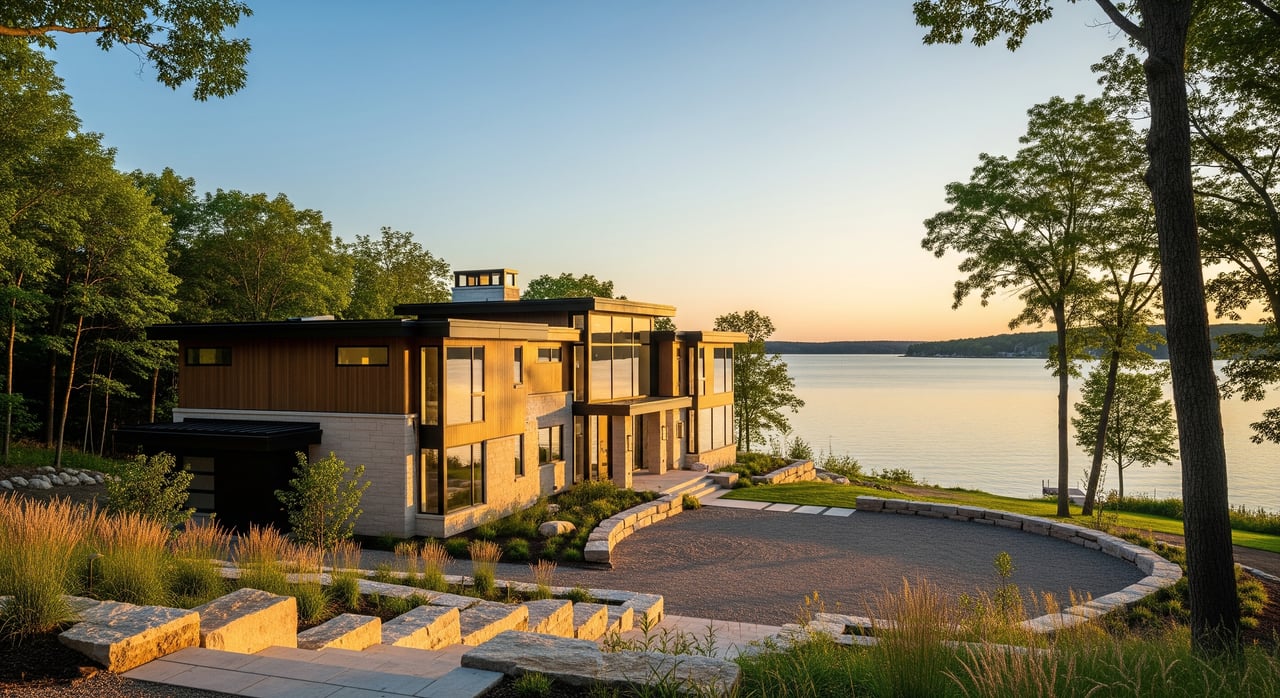
Thinking about building a home in Orono but not sure where to start? You have unique opportunities here, especially near Lake Minnetonka, but you also face extra reviews, permits, and design choices that can stretch your schedule and budget. In this guide, you’ll learn how to choose the right lot, vet local builders, navigate architectural review and permits, plan a realistic timeline, and prepare financing. Let’s dive in.
Choose the right Orono lot
Picking the right lot sets the tone for your entire project. In Orono, shoreline and wetland rules add layers of review and can shape your home’s footprint, rooflines, and landscaping. A thoughtful lot search can save you months and protect your budget.
Shoreland, wetlands, and watershed rules
Orono borders Lake Minnetonka and several wetlands, so many sites fall under local shoreland ordinances and watershed district oversight. You should expect buffers from the ordinary high-water level, limits on impervious surfaces, and stormwater management requirements. Shoreline features like docks or stairways often need separate permissions from city, county, or state agencies. Plan for these reviews early so they do not delay permits.
Lot features that influence cost
- Orientation and solar access. Sunlight patterns affect comfort, energy performance, and future solar potential.
- Views and privacy. Lake or woodland views are valuable, but confirm whether nearby parcels are buildable and how setbacks affect view corridors.
- Topography and grade. Steeper lots may need retaining walls, special foundations, and robust erosion control. Flat lots can require engineered drainage.
- Soil and groundwater. Rock ledge, peat, or high water tables can change your foundation design. A geotechnical report helps you avoid surprises.
- Trees and canopy. Mature trees add value but can limit building envelopes. Check any tree protection rules or mitigation requirements.
- Utilities and access. Verify municipal water and sewer or confirm records for private well and septic. Also check gas, electric, broadband, and driveway access.
- Easements and setbacks. A current boundary survey and schematic site plan will show setbacks, utility easements, and any critical areas.
- Floodplain and insurance. Review FEMA maps and local overlays to see if an elevation certificate or flood insurance may be required.
Due diligence before you write an offer
- Obtain a current title report and all recorded CCRs or plat restrictions.
- Order a current boundary and topographic survey.
- Request or budget for a geotechnical report.
- Confirm city setbacks, maximum lot coverage, and height limits.
- Verify water and sewer availability and any tap or connection fees.
- Check for wetlands, shoreland overlays, and watershed requirements; request delineations if needed.
- Confirm buffers from the lake or wetlands and any tree-protection rules.
- Ask about HOA or ARC review timelines and fees.
- For well or septic, obtain existing records and any replacement rules.
- Ask the seller for any past permits, completed site work, or expired approvals.
Common trade-offs on Orono lots
- A stunning view lot may be small or steep, which can drive up foundation and retaining costs.
- Undeveloped sites often extend timelines due to utility extensions and soil stabilization.
- Lots with utilities at the street can be faster and less costly but may offer less privacy or topography.
Vet builders with local experience
The right builder can keep your project on schedule and in budget. In Orono, specific knowledge of shoreline regulations and local review processes is a real advantage.
Which builder model fits you
- Production builders. Standardized plans, predictable pricing, and faster schedules. Limited customization.
- Semi-custom builders. A balance of set floorplans with flexible options.
- Custom builders. Full design control with longer timelines and a variable budget.
- Design-build or architect-led teams. Integrated design and construction can reduce coordination risk, though total cost may be higher.
Pre-screening criteria
- Licensing and registration. Confirm state and local requirements for the builder and trades.
- Insurance. Request certificates for general liability and workers’ compensation. Ask about bonds on larger projects.
- History and reputation. Look for experience in Orono and Hennepin County, especially with shoreland and lake properties.
- Portfolio and references. Ask for recent, similar projects and drive-by addresses to view workmanship.
- Financial stability. Ask about typical project size, reliance on subcontractors, and financial strength.
Questions to ask each builder
- What is your schedule from groundbreaking to certificate of occupancy for a similar-sized Orono home?
- Do you use fixed-price specifications or allowances? How are allowances handled in the contract?
- Who manages permits and subcontractors? Who is my day-to-day contact?
- How do you handle change orders and price/schedule impacts?
- Can you share a sample contract, warranty terms, and a detailed list of inclusions?
- How do you handle unforeseen site conditions like rock or high groundwater?
- Who are your preferred suppliers and are warranties transferable?
- What is the draw schedule and which inspections or milestones trigger draws?
- How do you protect neighboring properties and trees during construction?
Contract types and key clauses
- Fixed-price. Predictable total cost if allowances are clear. Change orders can be costly.
- Cost-plus with GMP. More transparency into costs and a cap. Some risk shifts to you.
- Time and materials. Least predictable and less common for buyers needing budget certainty.
Include clear language on scope and inclusions, draw schedules, liquidated damages or completion guarantees, change-order procedures, warranty terms, dispute resolution, insurance and indemnity, and lien waiver requirements.
Red flags to avoid
- No sample contract or refusal to share references.
- No proof of insurance or reluctance to share subcontractor lists.
- A record of stop-work notices or many unresolved disputes.
- Vague schedules, unclear allowances, or poor on-time completion history.
Design review and permits
In Orono, you need to plan for both private and public reviews. The order and completeness of your submittals can make or break your timeline.
HOA and ARC reviews
Many neighborhoods, especially on or near the lake, have Architectural Review Committees with formal submittals. You may need elevations, material schedules, site plans, landscape plans, and tree removal details. ARC meetings often follow set cycles, so missed deadlines can push you to the next meeting date.
Municipal site plan and building permits
The City of Orono planning and building departments handle zoning, site-plan review, building permits, and inspections. Municipal review may require stamped engineering for grading, drainage, and erosion control. Hennepin County records and maps can flag floodplains, easements, or well and septic history. Shoreline or wetland work may also involve the Minnesota DNR or a watershed district.
Lakefront design considerations
- Massing and scale. Placement and stepped foundations can preserve views and reduce visual bulk from the water.
- Materials and colors. Many CCRs favor natural finishes and muted palettes to blend with the shoreline.
- Impervious surfaces. Roofs, patios, and driveways count toward lot coverage. Permeable materials can help manage stormwater.
- Rooflines and runoff. Plan for detention, infiltration, swales, or rain gardens to manage concentrated flows to the lake.
- Shoreline structures. Docks, seawalls, boathouses, and stairways often require separate approvals.
Deliverables to request from your team
- A site plan with setbacks, easements, impervious area, and stormwater features.
- A landscape and tree protection plan with temporary fencing and mitigation plantings.
- A grading and drainage plan stamped by an engineer if required.
- Elevations, material schedules, and finish boards for ARC submittal.
- A phased construction plan addressing staging, erosion control, and site restoration.
Timeline: from lot to move-in
Every project is different, but you can use these ranges to plan and set expectations. Complexity, ARC cycles, and shoreland reviews can extend timelines.
- Lot purchase and due diligence: 2 to 8 weeks.
- Design from schematic to permit-ready drawings: 6 to 16+ weeks. Custom homes take longer.
- Permit review and approvals: 4 to 12+ weeks, depending on completeness and reviews.
- Site work and foundation: 2 to 8 weeks.
- Framing to dried-in: 4 to 8 weeks.
- Rough-ins and insulation: 4 to 8 weeks.
- Interiors, trim, and final inspections: 6 to 12 weeks.
- Total construction for a custom single-family home: commonly 8 to 12 months, with 6 to 18 months possible based on site and design.
Common causes of delay
- Incomplete permit packages or ARC resubmissions.
- Unforeseen site conditions like unsuitable soils or shallow bedrock.
- Supply-chain delays on windows, specialty doors, or HVAC equipment.
- Weather impacts during excavation and exterior work.
- Change orders that ripple through schedules.
- Subcontractor bottlenecks in high-demand trades.
Scheduling best practices
- Finalize specifications and allowances early and reserve contingency funds for true unknowns.
- Place long-lead orders, like windows and cabinetry, right after design completion.
- Consider contractual milestones and liquidated damages if timing is critical.
- Assign a single point of coordination to track inspections, draws, and approvals.
Financing your Orono build
Construction lending has more moving parts than a standard mortgage. Organizing documents and builder details up front makes approvals faster.
Common loan paths
- Construction-to-permanent (single-close). Funds the build with interest-only draws, then converts to a mortgage at completion.
- Standalone construction loan plus a separate mortgage (two-close). Two sets of costs and possibly different rates.
- Lot-only loan. Short-term financing for the land purchase with higher down payments and rates.
- Cash for the lot plus a construction loan. This can simplify holding costs and timing.
What lenders typically require
- A detailed construction contract with total cost, allowances, and schedule.
- A draw schedule tied to milestones and inspections.
- Builder vetting to confirm experience and reputation.
- An appraisal based on finished value using your plans and specs.
- Down payment and reserves that reflect equity in the lot and a meaningful borrower contribution.
- An interest reserve to cover payments during construction.
- Third-party inspections before each draw release.
Cash flow, timing, and protections
- Coordinate the lot closing and construction loan to avoid duplicate costs.
- Confirm when the loan converts to permanent financing and how change orders impact the final appraisal.
- Budget a 5 to 10 percent construction contingency and a design contingency for selections.
- Ensure the builder’s risk policy is in place and that coverage transitions to your homeowner’s policy at completion.
- Require lien waivers from subcontractors at each draw and final waivers at completion.
- Seek completion guarantees when feasible and use a clear, written change-order process.
How your buyer’s agent keeps you on track
A skilled local agent can streamline a complex new build. In Orono, that often means coordinating documents, aligning the team, and keeping the schedule moving.
- Early-stage coordination. Gather surveys, CCRs, and any prior permits. Order geotechnical and wetlands reviews when needed.
- Builder matching and interviews. Pre-screen local builders, set up consistent interviews, and compare bids side-by-side.
- Contract review and negotiation. Check for clear scopes, draws, change-order terms, and milestone dates. Recommend legal review when appropriate.
- Permit and ARC navigation. Package submittals, track cycles, and coordinate with architects and engineers to avoid resubmissions.
- Timeline and inspection tracking. Monitor milestones, coordinate inspections, and verify lien waivers at each draw.
- Lender and appraisal support. Introduce construction lenders, align closings, and help assemble plans and specs for the appraisal.
- Close-out. Collect warranties, as-builts, and final inspection sign-offs before the last draw.
First steps to take now
- Request the recorded plat, CCRs, current survey, and any prior site studies from the seller or listing agent.
- Order a geotechnical investigation if the lot is undeveloped, sloped, or lakefront.
- Speak with the City of Orono planning staff to confirm setbacks, height, lot coverage, and ARC expectations.
- Prequalify with a construction-lending specialist and share preliminary plans or a draft builder contract for appraisal planning.
- Interview at least two builders with comparable local experience and request itemized bids.
- Include contingencies for ARC and municipal approvals in both purchase and construction contracts.
If you want a steady hand to coordinate the moving parts, connect with a local expert who does this every day. For single-point-of-contact guidance from lot search to closing, reach out to Mark Geier.
FAQs
How long does new construction take in Orono?
- Most custom homes take 8 to 12 months once construction starts, and total timelines can range from 6 to 18 months depending on design complexity, site conditions, and permit cycles.
Do I need a geotechnical report for a lakefront lot?
- Yes, if the lot is undeveloped, sloped, lakefront, or shows signs of poor soils, a geotechnical report helps inform foundation design and reduces risk.
What permits are needed for shoreline features like docks?
- Shoreline structures often require separate approvals from city, county, and sometimes state or watershed agencies, in addition to your building permit.
How much contingency should I budget for a new build?
- A common practice is 5 to 10 percent of construction cost for contingency, plus additional funds for desired upgrades or unforeseen conditions.
Who handles permits and inspections during construction?
- Builders typically manage permit applications and schedule inspections, but you should verify this in the contract and request copies of all approvals and sign-offs.
Are there special rules for impervious surfaces near Lake Minnetonka?
- Yes, shoreland rules often limit impervious area and require stormwater management features like infiltration systems or rain gardens to protect the lake.