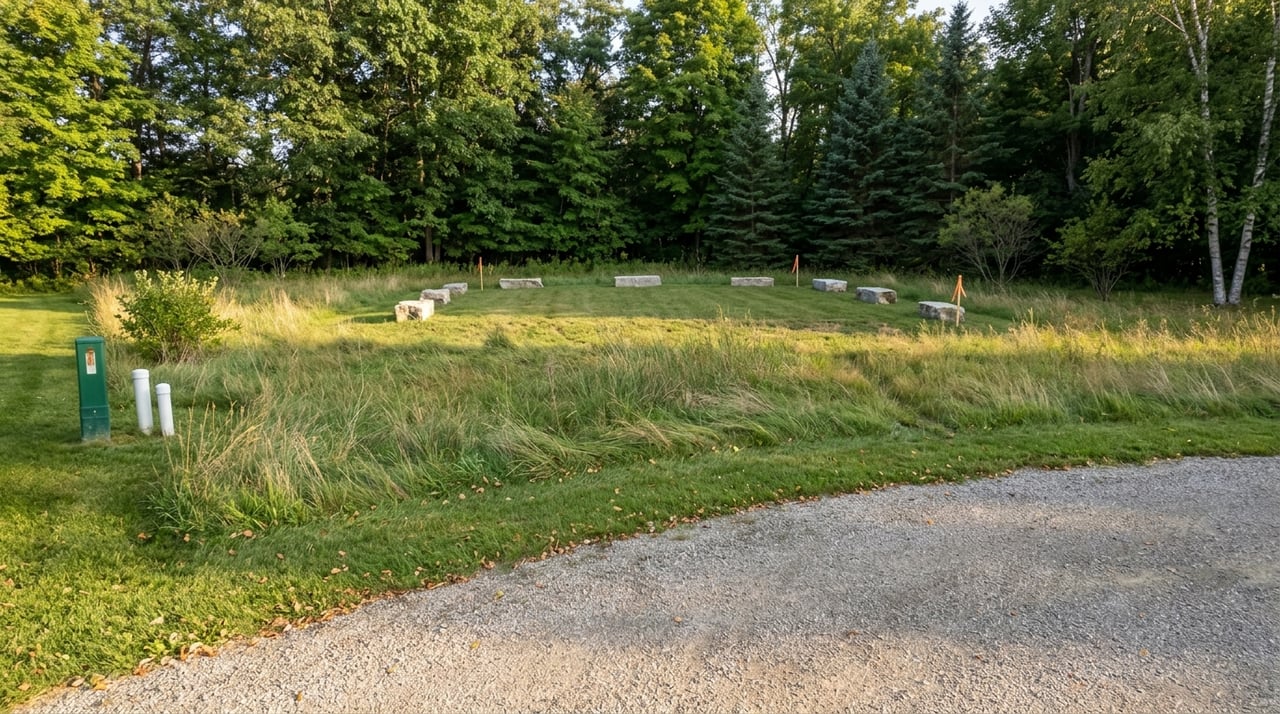
If you are thinking about buying acreage or a luxury build site in Medina, it is easy to focus on the view, the tree line, or the feeling of privacy first. But in Medina, the real value of a parcel often comes down to what you can actually build, how the site is served, and what hidden constraints may shape your plans. A smart review up front can save you time, money, and major frustration later. Let’s dive in.
Why Medina land is different
Medina is not a one-size-fits-all suburb. According to the city’s sanitary sewer plan, Medina is a largely residential and agricultural community, and about 38% of the city is covered by lakes, wetlands, and floodplains.
That matters because two parcels with the same acreage can offer very different build opportunities. One site may feel close to established suburban areas near Plymouth or Orono, while another may offer a more rural setting with a stronger focus on privacy, open land, and estate-scale presence.
For you as a buyer, that means acreage alone does not tell the full story. In Medina, buildability, utility access, topography, and environmental constraints often matter just as much as lot size.
Start with zoning first
Before you get attached to a parcel, confirm the zoning. In many Medina land purchases, zoning is the first filter that tells you whether your vision is realistic.
The two districts that matter most for acreage buyers are AG (Agricultural Preservation) and RR (Rural Residential) under the city’s zoning code.
AG zoning in Medina
AG zoning is designed for much larger parcels. The minimum lot size is 40 acres, with 500-foot minimum lot width and depth, plus 100/50/100-foot front, side, and rear setbacks.
The code also requires contiguous soils suitable for a standard on-site sewage disposal system. Both a primary and secondary septic site must be protected during construction, which makes soils and site layout especially important.
RR zoning in Medina
RR zoning is often more relevant if you are exploring estate-sized home sites. In RR, a lot must contain at least five acres of contiguous suitable soils for a standard sewage disposal system, with 300-foot minimum lot width, 200-foot minimum depth, 50-foot front setbacks, and 50-foot side and rear setbacks for lots five acres or larger.
RR also limits hard-surface coverage to 40% of the lot area. The city may allow up to 50% if low-impact design or BMPs prevent a net increase in runoff. Single-family home height is generally limited to 35 feet, with possible flexibility up to 40 feet if city standards are met.
Shoreland rules can change everything
If a parcel is near water, your assumptions about what can be built may need to change. Medina’s shoreland overlay rules apply within 1,000 feet of certain public waters and 300 feet of tributary streams.
These rules can add stricter requirements for lot dimensions, setbacks, impervious surface coverage, erosion control, steep slopes, and sewage treatment placement. In shoreland areas, the maximum lot area covered by impervious surfaces is 25%.
That can affect more than the house itself. Long driveways, pools, sport courts, patios, outbuildings, and grading plans may all need to fit inside a tighter development envelope.
Utilities are not uniform across Medina
One of the biggest mistakes buyers make is assuming utility service works the same from one parcel to the next. Medina’s utility billing information shows that the city bills for water, sewer, and stormwater, but service varies by location.
The city operates multiple water systems, and some areas receive water from neighboring communities. Medina’s sewer plan also identifies four sewer service districts: Elm Creek, Maple Plain, Morningside, and Plymouth.
At the same time, private septic remains common. The city’s planning documents note that Medina has 702 known individual sewage treatment systems within city limits, which tells you that many acreage sites still rely on private systems.
Wells and septic may be the real decision point
For many luxury land buyers, the true deal-breaker is not the view or the asking price. It is whether the parcel can support the well, septic, and building plan you want.
For sites not served by municipal sewer, Medina requires an approved individual sewage treatment system under its septic code. Permit applications may require a site evaluation report, soil descriptions, percolation testing if needed, a design report, and a management plan.
The city also requires ongoing septic maintenance. Systems without an operating permit or management plan must be assessed at least once every three years, and the city says septic tanks must be inspected and pumped at least every three years.
Private wells require their own diligence. The Minnesota Department of Health explains that well disclosure is required when real property is sold or transferred, including the number, location, and status of known wells.
The state does not require private well water testing at transfer, but many lenders do require it, often for coliform bacteria and nitrate. If a well is not in use, it generally must be sealed by a licensed contractor or covered by a maintenance permit.
Can you build a custom estate on five acres?
Sometimes, yes. But the answer depends on more than the acreage number shown in the listing.
A five-acre Medina site may work for a custom home if the zoning, soils, septic design, setbacks, and utility status all line up. RR zoning is specifically structured around five acres of suitable soils, while AG requires far larger parcels.
This is why two five-acre parcels can have very different value. One may support the house, garage, outdoor living, and access plan you want, while another may lose usable area to wetlands, setbacks, slope limits, or septic placement.
Subdivision potential needs separate review
If your plan involves splitting land or creating multiple lots, zoning alone is not enough. Medina’s subdivision code becomes critical.
The city defines a platted subdivision as one with a lot area under 5 acres, lot width under 300 feet, or any lot that requires a new street. Subdivision review may require a preliminary plat, final plat, survey by a Minnesota-registered surveyor, topographic data, and proof that water supply and wastewater disposal will be adequate.
If a parcel is being marketed with future split potential, that claim deserves close review before you rely on it. Land that looks flexible in marketing remarks may face meaningful city review requirements in practice.
A Medina land due-diligence checklist
Before you write an offer, it helps to think of the property as a site-specific development project, not a typical residential lot. A disciplined review can protect you from expensive surprises.
Here are the checks that matter most:
- Confirm the zoning district so you understand minimum lot size, setbacks, height limits, and site coverage rules.
- Verify utility service before pricing the land as a finished homesite.
- Review survey work, easements, and right-of-way lines because setbacks are measured from the property line at the edge of the right-of-way, not the edge of the street, according to the city’s right-of-way guidance.
- Check soils and septic feasibility since suitable soils are a core requirement in both zoning and septic review.
- Look for wetlands, floodplain, shoreland, and steep-slope constraints that can shrink the buildable envelope.
- Plan around the future house design so the lot works not just for the home, but also for the driveway, outdoor spaces, accessory structures, and drainage strategy.
Why local guidance matters in Medina
Luxury land buying in Medina is rarely simple. The best sites tend to be the ones that have been reviewed in the right order, before excitement takes over the decision.
A strong advisor helps you connect the listing photos to the city code, utility maps, survey details, and permit realities. Medina’s building department resources show just how many moving parts can be involved in taking a parcel from contract to completed home.
If you are considering acreage or a luxury build site in Medina, working with someone who understands the local process can help you move with more confidence and avoid costly assumptions. If you want experienced, direct guidance as you evaluate land opportunities in Medina and the surrounding Lake Minnetonka area, connect with Mark Geier.
FAQs
What should you verify before buying acreage in Medina?
- Confirm zoning, utility service, soils, septic feasibility, easements, right-of-way lines, and any shoreland, wetland, floodplain, or slope constraints.
Can you build on a five-acre lot in Medina?
- Sometimes. A five-acre parcel may work in RR zoning if the site has sufficient suitable soils and the setbacks, septic design, and utility conditions support your plans.
Do Medina acreage properties always have city sewer and water?
- No. Utility service varies by parcel, and some properties rely on private well and septic systems instead of municipal connections.
Why do wetlands and shoreland matter for Medina build sites?
- They can reduce usable build area, limit impervious coverage, increase review requirements, and raise engineering or drainage costs.
Does Medina allow land to be split into smaller lots?
- In some cases, but subdivision review may require plats, surveys, topographic information, and proof of adequate water and wastewater service.
Why is buying land in Medina more complex than buying a standard lot?
- Because site value depends on zoning, soils, utility access, environmental constraints, septic or well requirements, and how the future home plan fits within the parcel’s buildable envelope.